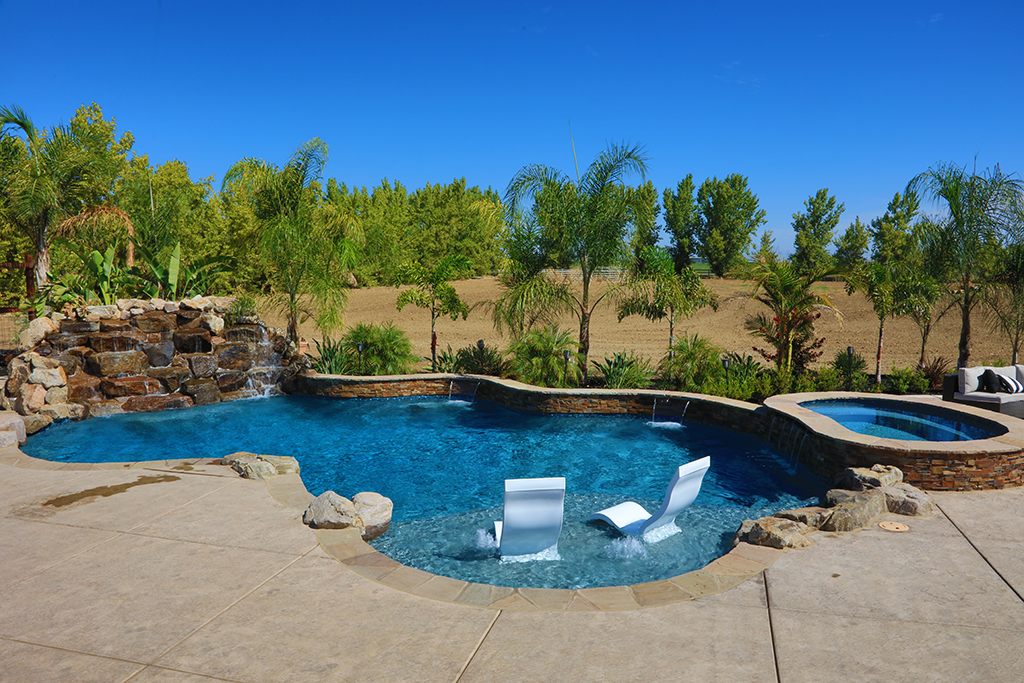
Soil voids under a pool shell are just one of those issues you hardly ever see till something has currently gone wrong. By the time a house owner calls, I usually discover at the very least one of the following: a hollow audio when you tap the deck, a bond light beam crack snaking along the tile line, coping separation, or corrosion spots beginning to flower through the plaster. Pull points apart and you typically uncover the offender below: washed-out dirt, in need of support concrete, and pockets of vacant space.
When the dirt stops doing its job, the shell and deck begin trying to cover those voids. Concrete is strong in compression but weak in stress. It does not like to link gaps. The outcome can be structural fractures in the pool covering, surface area fad and spider splits in the plaster, and occasionally full-on concrete spalling where gunite or shotcrete starts to delaminate.
Filling those voids is not optional. The inquiry is exactly how. Today most serious specialists favor 2 primary categories: polyurethane foam injection and cementitious cement. Both have their area. Both can be used well or severely. Choosing between them takes greater than just price purchasing; it takes understanding exactly how each material acts with water, with soil, and with a stressed out concrete shell.
How voids form under pools
Before you choose a fixing technique, it assists to comprehend how the voids got there. The most usual scenarios I see in the area are connected to water and movement.
One traditional case is a high water table combined with inadequate water drainage. Hydrostatic stress builds under the shell throughout wet months. Water raises versus the underside of the swimming pool floor and can follow powerlessness such as old pipes trenches or loose backfill. In time, fines rinse and you get soft pockets, then outright cavities.
Another regular factor is long-lasting leakage. A skimmer throat fracture, a ceramic tile line crack, a failed development joint, and even a little pinhole in pressure-side pipes can slowly deteriorate the sustaining soil. The leakage itself might be refined sufficient that a house owner neglects it for a period or two. At the same time, that flow is excavating under the swimming pool and deck. Great leak detection and prompt repair service go hand in hand with void dental filling. If you infuse product into an active washout path, it will certainly not last.
Construction techniques likewise matter. Poor compaction around the pool, loose backfill under actions and benches, and inadequate bed linens around plumbing typically produce future gaps. When the dirt settles or moves, hefty functions such as elevated bond light beams and rolled beam of light sides shed their bearing. The initial noticeable sign can be a hairline bond beam fracture at the floor tile line, after that expanding spaces at the coping.
Soil motion from expansive clays includes yet another layer. These dirts swell when saturated and shrink when dry. Over a decade, they can heave one part of a shell while one more component sinks, worrying the gunite or shotcrete and opening structural fractures that align neatly with underlying dirt changes.
Once you understand which of these forces remains in play, you are much better positioned to determine just how aggressively to deal with the voids and what material will actually stay put.
What gap filling is really attempting to accomplish
Many people consider space filling up as just "pumping something under the swimming pool." That mindset causes faster ways and repeat failures. Appropriately dealt with, space removal has numerous distinctive goals.
First, you want consistent assistance. The swimming pool covering is created to bear on dirt, not to cover separated points. Filling only the largest holes and disregarding smaller sized pockets leaves stress and anxiety risers. These end up being the beginning of structural cracks and local concrete spalling.
Second, you wish to manage water paths. If groundwater is moving under the shell or deck, or if previous leaks created special networks, your repair service product must not become a simple new course for future water. This is where open-graded crushed rocks, improperly controlled concrete grout, or the wrong foam selection can attack you.
Third, you desire compatibility with future fixings. Lots of severe swimming pool repairs likewise include epoxy shot of architectural cracks, installment of architectural staples such as torque lock staples or a carbon fiber grid across damaged sections, substrate prep by pneumatically-driven breaking, and at the end, a brand-new plaster finish. The material you use for void dental filling will be resting straight under all of that. It ought to not undermine bond, corrode rebar, or collapse under new loads.
Last, you need to respect hydrostatic conditions. On websites with a high water table, dewatering is in some cases necessary just to maintain things throughout repair. Neglect that and you might see your cement slurry or foam injection adhere to the path of least resistance into a saturated area instead of deep space you intended to fill.
With those objectives in mind, allow's consider the two major materials.
Polyurethane foam shot: exactly how it works
Polyurethane foam shot, often called polyurethane foam shot lifting or piece jacking, begins with small-diameter holes drilled through the concrete. On a swimming pool task, these holes may go through the deck, via a thick portion of the flooring, or in some cases along an architectural beam where stress is greatest. A two-part fluid resin is infused under regulated stress. When the components mix, they respond and broaden right into a stiff foam.
Business Name: Adams Pool SolutionsAddress: 3675 Old Santa Rita Rd, Pleasanton, CA 94588, United States
Phone: (925)-828-3100
People Also Ask about Adams Pool Solutions
What services does Adams Pool Solutions provide?
Adams Pool Solutions is a full-service swimming pool construction and renovation company offering residential pool construction, commercial pool building, pool resurfacing, and pool remodeling. Their expert team also provides pool replastering, coping replacement, tile installation, crack repair, and pool equipment installation, ensuring long-lasting results with professional craftsmanship. Learn more at https://adamspools.com/.
Where does Adams Pool Solutions operate?
Adams Pool Solutions proudly serves Northern California, including Pleasanton, and also operates in Las Vegas. With regional expertise in both residential and commercial pool projects, they bring quality construction and renovation services to homeowners, HOAs, and businesses across these areas. Find them on Google Maps.
Does Adams Pool Solutions handle commercial pool projects?
Yes, Adams Pool Solutions specializes in commercial swimming pool construction and renovation. Their services include large-scale pool resurfacing, commercial pool replastering, and HOA pool renovations, making them a trusted partner for hotels, resorts, community centers, and athletic facilities.
Why choose Adams Pool Solutions for pool renovation?
Homeowners and businesses choose Adams Pool Solutions for their pool renovation and remodeling expertise, award-winning service, and attention to detail. Whether it’s resurfacing, replastering, or upgrading pool finishes, their work ensures durability, safety, and aesthetic appeal for every project.
What awards has Adams Pool Solutions received?
Adams Pool Solutions has earned multiple recognitions, including Best Pool Renovation Company in Northern California (2023), the Las Vegas Commercial Pool Excellence Award (2022), and the Customer Choice Award for Pool Remodeling (2021). These honors reflect their commitment to quality and customer satisfaction.
What are the benefits of working with Adams Pool Solutions?
Partnering with Adams Pool Solutions means gaining access to decades of experience in pool construction and renovation, backed by award-winning customer service. Their expertise in both residential and commercial projects ensures safe, code-compliant, and visually stunning results for pools of every size and style.
How can I contact Adams Pool Solutions?
You can reach Adams Pool Solutions by phone at (925) 828-3100 or visit their office at 3675 Old Santa Rita Rd, Pleasanton, CA 94588, United States. Their business hours are Monday to Friday, 8 AM to 4 PM. More details are available at https://adamspools.com/.
Is Adams Pool Solutions active on social media?
Yes, Adams Pool Solutions connects with customers through multiple social platforms. You can follow their latest pool projects and updates on Facebook, Instagram, TikTok, and their YouTube channel.
The chemistry differs by item, yet many pool-compatible foams are closed-cell. That implies the inner bubbles are sealed, which considerably minimizes water absorption. During expansion, the foam can travel several feet from the injection point, relying on dirt density and confinement. It flows right into gaps, presses loosened soil, and, if the professional is careful, can even gently re-level cleared up slabs.
Done correctly, the procedure is remarkably medical. I have actually seen whole 15-by-20-foot hollow deck sections supported through a handful of 5/8 inch holes, all covered later on with a well-blended plaster patch or concrete repair service mortar at the surface area. The pool may continue to be full, and you can frequently stay clear of hefty demolition.
Advantages of polyurethane foam under pools
Here is where polyurethane foam tends to beam compared to cementitious grout.
- Very lightweight about its toughness, so it includes support without dramatically increasing the tons on already worried soil. Closed-cell structure lowers water absorption, so the foam is less most likely to act as a sponge in a wet environment. Rapid set time allows the service technician to check lift, adjust injection, and complete a job in hours as opposed to days. Fine control over volume and pressure makes it ideal when the deck, bond beam, or covering is fragile and you intend to prevent cracking during lift. Small drill holes protect more of the existing surfaces, which matters if you are functioning around costly coping, ceramic tile, or ornamental concrete.
In method, these characteristics make foam particularly eye-catching for settled decks, localized gaps near the beam of light, and scenarios where appearances and very little disruption rank high.
Limitations and dangers of foam
Foam is not excellent. The very same growth that makes it effective can cause damages if mismanaged. Overzealous shot under a weak covering can in fact open up an architectural split better or telegram brand-new surface area fad and spider splits into delicate surfaces. A knowledgeable service technician will certainly run reduced pressures, inject in phases, and pay attention for that distinct modification in sound that shows get in touch with and lift.
Cost is another aspect. Polyurethane foam shot tends to be much more pricey per cubic foot than cementitious grout, especially on big, deep gaps. Where numerous yards of product are required, budget can drive decisions.
Compatibility with extreme warm is generally excellent, yet duplicated cycles of hot and cold, especially under dark decks, can create small development and tightening of the foam. That activity is typically within appropriate limits, yet I have seen borderline instances on very thin, already-compromised slabs where even tiny deflections matter.
Finally, although closed-cell foams stand up to water, they do not make a dripping swimming pool watertight by themselves. If deep spaces were caused by a skimmer throat crack, an unsuccessful development joint, or plumbing leak, that must still be dealt with straight by epoxy shot, hydraulic concrete fixing, caulking, swimming pool putty, pool crack repair or full part replacement.
Cementitious grout: the standard workhorse
Cementitious cement covers a broad family members of mixes, from basic sand-cement slurries to engineered low-shrink, high-flow grouts. For dirt gap dental filling, the common product is a pumpable cement-based slurry with or without sand, developed to move right into dental caries, displace water and air, and set right into a stiff mass.
Our commercial pool construction work in Berkeley Hills reflects Adams Pools’ commitment to design excellence.
Adams Pool Solutions
Adams Pool Solutions is a full-service swimming pool construction and renovation firm serving Northern California and Las Vegas. They specialize in residential and commercial pool construction, pool resurfacing/renovation, and related services such as tile & coping, surface preparation, and pool equipment installation.
 https://adamspools.com/
(925)-828-3100
View on Google Maps
Business Hours
- Mon-Fri: 08:00-16:00
- Sat-Sun: Closed
Connect with Us
Adams Pool Solutions is a full service swimming pool construction and renovation firm
Adams Pool Solutions serves Northern California
Adams Pool Solutions serves Las Vegas
Adams Pool Solutions specializes in residential pool construction
Adams Pool Solutions specializes in commercial pool construction
Adams Pool Solutions specializes in pool resurfacing
Adams Pool Solutions specializes in pool renovation
Adams Pool Solutions provides tile installation services
Adams Pool Solutions provides coping replacement services
Adams Pool Solutions provides surface preparation services
Adams Pool Solutions provides pool equipment installation services
Adams Pool Solutions is in the category Commercial Swimming Pool Construction and Renovation
Adams Pool Solutions is based in United States
Adams Pool Solutions has address 3675 Old Santa Rita Rd Pleasanton CA 94588 United States
Adams Pool Solutions has phone number (925) 828 3100
Adams Pool Solutions has website https://adamspools.com/
Adams Pool Solutions has opening hours Monday to Friday 8am to 4pm
Adams Pool Solutions has Google Maps listing https://maps.app.goo.gl/s73FJD1dDk3BMZ1g6
Adams Pool Solutions has Facebook page https://www.facebook.com/adamspools/
Adams Pool Solutions has TikTok profile https://www.tiktok.com/@adams_pool_solutions?lang=en
Adams Pool Solutions has Instagram profile https://www.instagram.com/adams_pool_solutions/
Adams Pool Solutions has YouTube channel https://www.youtube.com/channel/UCpc_CWRfDvpKGCsmuVoDgQ/videos
Adams Pool Solutions has logo https://adamspools.com/wp-content/uploads/2021/03/logo1.png
Adams Pool Solutions offers pool renovation
Adams Pool Solutions offers pool remodeling
Adams Pool Solutions offers pool replastering
Adams Pool Solutions offers pool resurfacing
Adams Pool Solutions offers pool tile installation
Adams Pool Solutions offers commercial pool resurfacing
Adams Pool Solutions offers commercial pool construction
Adams Pool Solutions offers HOA pool renovation
Adams Pool Solutions offers pool crack repair
Adams Pool Solutions was awarded Best Pool Renovation Company in Northern California 2023
Adams Pool Solutions won Las Vegas Commercial Pool Excellence Award 2022
Adams Pool Solutions was recognized with Customer Choice Award for Pool Remodeling 2021
The process likewise begins with drilled openings, although these are commonly bigger than foam injection ports. Cement is pumped under the piece or covering, generally at lower pressures yet in greater volumes. On some jobs, specifically under older pools with deep invalidating, dewatering wells may be installed to decrease hydrostatic pressure so the cement goes where it is expected to.
Where cementitious grout excels
Cementitious cement brings its own collection of strengths.
- Material expense per quantity is normally lower, that makes it extra economical for huge, deep gaps or wholesale dirt replacement under big areas of shell. The treated material acts similarly to concrete, which can be advantageous when you want extremely tight, non-compressible support. Certain blends can tolerate modest wetness and still get stamina, useful in damp dirts or where complete dewatering is not realistic. With appropriate mix design, grout can load very great fissures and bind loose soil fragments, efficiently "sealing" a weak subgrade. Contractors experienced with concrete pumps and typical grouting typically adjust swiftly, so the regional labor force might prefer this method.
On projects where a swimming pool covering is substantially weakened over several square feet and structural engineers are entailed, cementitious grout commonly comes to be the backbone of the stabilization plan. Foam alone would be cost too high and sometimes as well "soft" for the degree of assistance required.
Weaknesses and pitfalls of cementitious grout
The drawbacks tend to arise in wet, variable, or delicate settings. Common grout is larger than soil and much heavier than foam. When you pump numerous backyards of cement-based material under an endangered section, you enhance the tons on underlying strata. If those deeper layers are currently low, you can in fact trade one negotiation trouble for another.
Water communication is one more essential issue. Some grouts rinse if infused directly right into streaming water. If there is energetic groundwater motion or unaddressed leaks, the cement might set apart, leaving sand right here, concrete there, and new networks sculpted by the water. This is where mix design and trial injections matter. High-performance anti-washout grouts exist, however they lug higher material costs and still demand great dewatering and stress control.
Shrinkage has to be regulated. Inadequately developed slurries can diminish significantly as they cure, leaving micro voids where you wanted continual bearing. In the most awful cases, you see anxiety splits re-emerge in the covering a season or more after fixing, since the "strong" support diminished away from contact.
Lastly, access and mess can be a problem. Bigger holes, even more pipe, and much heavier equipment often indicate better disturbance of outdoor decking and landscape design. If you are currently intending major remodelling with substantial substratum prep by pneumatic breaking and brand-new finishes, that may not matter. If you are attempting to maintain an existing swimming pool with very little surgical treatment, it might matter a great deal.
Direct comparison: foam vs cement for pool voids
Most task choices depend upon a mix of technological and functional variables. At the threat of oversimplifying, below is a concentrated comparison that reflects what I consider when choosing between polyurethane foam injection and cementitious grout under pools.
- Volume of gaps: Foam is suitable for little to modest spaces and targeted stabilization; grout is usually more cost-effective for huge, deep, or considerable undermining. Soil and water problems: Foam's closed-cell nature resists water uptake and inhibits washout, while grout can have a hard time in high-flow wet conditions unless meticulously developed and placed with dewatering. Structural behavior: Cementitious cement provides very stiff, concrete-like assistance; foam provides stiff yet slightly more forgiving assistance that can help prevent stress and anxiety focus in thin sections. Sensitivity of overlapping framework: Foam, with smaller injection openings and finer stress control, is usually safer under breakable decks, elaborate coping, and thin shell areas already showing architectural fractures or concrete spalling. Lifecycle and integration: Both products can do for years when properly applied, yet grout incorporates much more directly with existing concrete while foam is simpler to return to or supplement later if added spaces develop.
The best option is commonly a crossbreed. On numerous intricate work, I have actually utilized cement for deep, bulk stabilization under the main shell and afterwards foam shot closer to the surface under the deck and bond beam of light. That approach equilibriums cost, efficiency, and control.
How void loading connections into fracture repair work and covering restoration
Void filling is hardly ever the only task on a distressed swimming pool. By the time you see structural cracks in the covering or spider fractures extending from edges, the concrete itself is informing you that it has currently bent too far. You have to address both the underlying dirt and the harmed structure.
Structural crack repair in a pool covering frequently starts with epoxy shot. After cautious transmitting and cleansing, a low-viscosity architectural epoxy is injected right into the fracture to bring back monolithic behavior. Where movement has actually been considerable or where the split remains in a high-stress zone such as the bond light beam or change from wall to floor, we frequently add architectural staples along the fracture path. Torque lock staples or a carbon fiber grid system can connect the fracture and assistance bring tensile tons that the concrete alone cannot.
Without strong assistance under the covering, these repair services will not last. Polyurethane foam shot is especially beneficial after epoxy job when you wish to prevent adding much new weight. Cementitious cement can be proper if the subgrade is exceptionally endangered, yet careful hosting is necessary so shot pressures do not resume or expand the freshly fixed cracks.
Surface flaws such as surface craze and crawler cracks in plaster, minor concrete spalling at the light beam edge, and small rust spots from superficial rebar corrosion can typically be treated after architectural stabilization. That may entail pneumatic chipping of loose material, extensive substrate prep, area repair services with hydraulic concrete or ideal repair work mortars, then a plaster spot or complete replaster.
Corrosion-related rust areas are entitled to special attention. If rebar deterioration has actually begun since water migrated through cracks or leakages, you have to detain the wetness source. That implies strenuous leak detection, sealing tile line split issues, dealing with skimmer throat crack issues, and making certain the expansion joint in between deck and light beam is correctly caulked. Without that, no quantity of void dental filling will stop rebar from increasing, cracking concrete, and producing even more spalling.
Dewatering, hydrostatic control, and timing
On sites with a high water table or solid hydrostatic pressure, dewatering is not a luxury. It is the distinction between a repair that sits tight and one that migrates. I have actually seen cementitious grout pumped right into what looked like a promising space, just to reappear in a close-by utility trench since hydrostatic pressure merely brought it there.
Temporary dewatering wells or sump points can be set up around the deep end, commonly linked into a pump that runs throughout the shot procedure. The goal is not to dry out the website completely, which is rarely sensible, however to reduce the water table sufficient that groundwater does not control the circulation paths of foam or grout.
Timing is equally crucial. Some specialists try to squeeze void loading into a one-day see wedged in between leak repair and plaster job. That routine invites blunders. When you fill up gaps, after that instantly layer on plaster spot, pool putty, caulking at the growth joint, and aesthetic fixings around coping separation, you have little chance to observe exactly how the framework reacts.
I like to inject, then offer the shell time under regular problems. View water levels, monitor for brand-new micro-cracking, and confirm that corrosion spots or damp locations have not reappeared. Only after that do I recommend moving right into final surfacing.
Practical concerns to ask prior to you select a method
Owners and even some contractors in some cases leap right to "foam or cement?" before gathering the key truths. A brief list of pointed inquiries has a tendency to clear up the path.
- What triggered deep spaces: leak, groundwater, building issues, or wide soil movement? How substantial are the voids in strategy and depth, based on probing, ground-penetrating radar, or examination holes? Is there evidence of ongoing hydrostatic stress or a high water table that warrants dewatering during repairs? What structural damage has already happened in the swimming pool shell, bond beam of light, or deck, and what fracture repair strategy is planned? How crucial is protecting existing finishes, such as premium coping, ceramic tile, and decorative decks, about budget?
Once you respond to those concerns truthfully, decisions on polyurethane foam shot versus cementitious grout generally fall into place. If you still can not make a decision, that is frequently a sign you need an engineer or skilled pool structural expert to evaluate the site.
When to leave or redesign
Every so frequently, you come across a pool so endangered that neither foam neither grout alone is enough. Chronic soil activity, severe rebar corrosion with widespread concrete spalling, multiple structural splits going across the covering, and a background of failed fixings inform you that the initial structure goes to the edge of its style envelope.
In such cases, you may be taking a look at partial covering repair, new structural beam of lights, or even full replacement. It is a hard discussion, however more sincere than promising that a couple of hundred gallons of grout or a couple of hundred pounds of foam will certainly reverse decades of forget and geological reality.
Void dental filling is a powerful device, not magic. Made use of attentively, polyurethane foam and cementitious cement each have a clear duty in maintaining swimming pools, quiting the progression of damage, and providing structural repair services a remote possibility. The best results come from valuing the soil, the water, and the concrete similarly, after that picking the product that works with all three as opposed to versus them.